
Super Bowl LX: Big Game, Bigger Casts

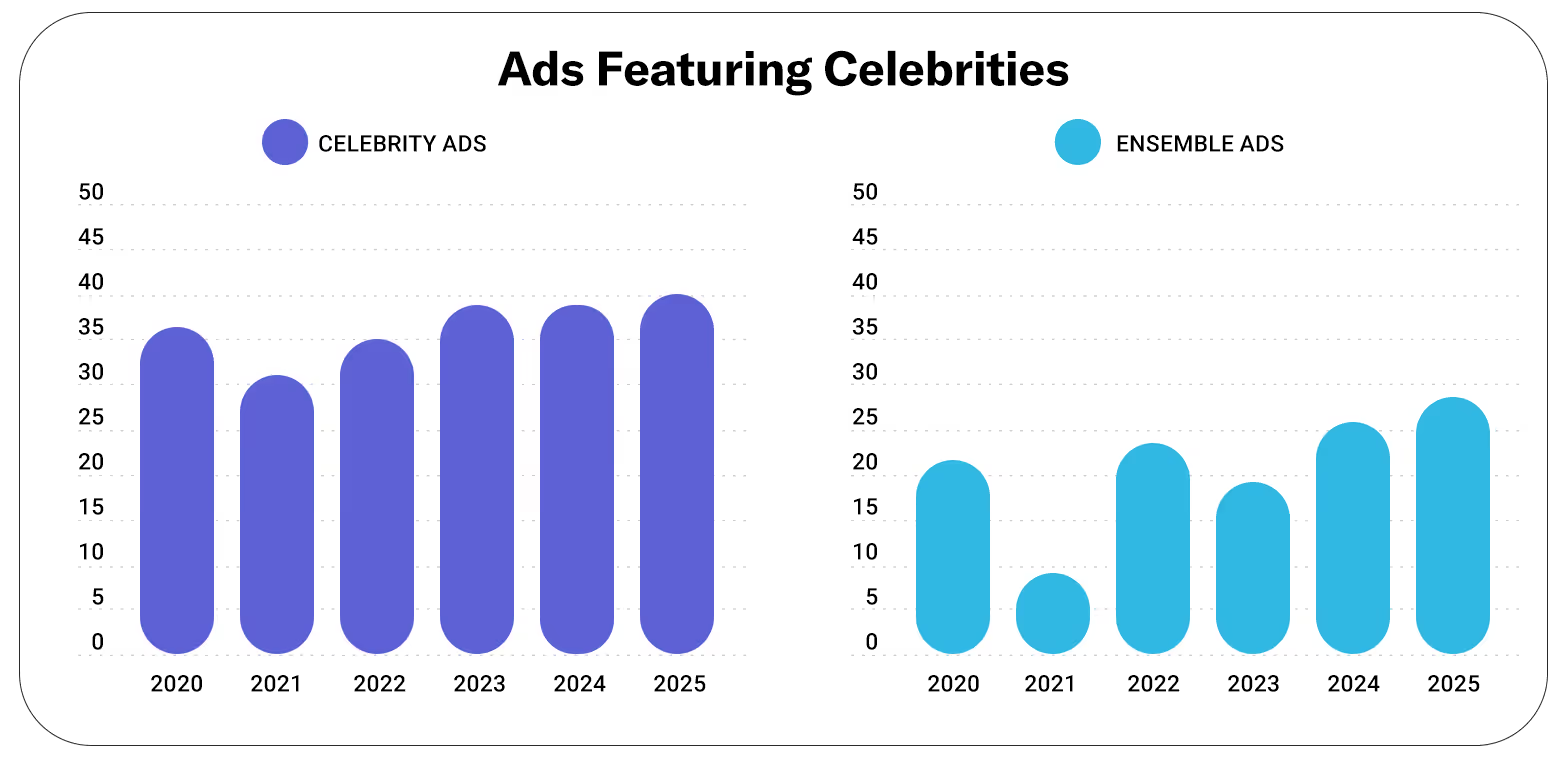
Celebrity ensembles have become the dominant creative strategy in Super Bowl advertising, and the data shows how decisively brands are leaning into stacked casts.
A New Playbook
The Super Bowl has always been about stars on and off the field, but the way brands use celebrities has fundamentally changed in just the last few years. What was once anchored by a single famous face has evolved into something far more crowded and intentional. Today, Super Bowl ads increasingly stack multiple well-known personalities into a single spot to maximize fan engagement in the most competitive media moment of the year.
XR’s Ad Delivery and Payments Data Tells the Ensemble Story
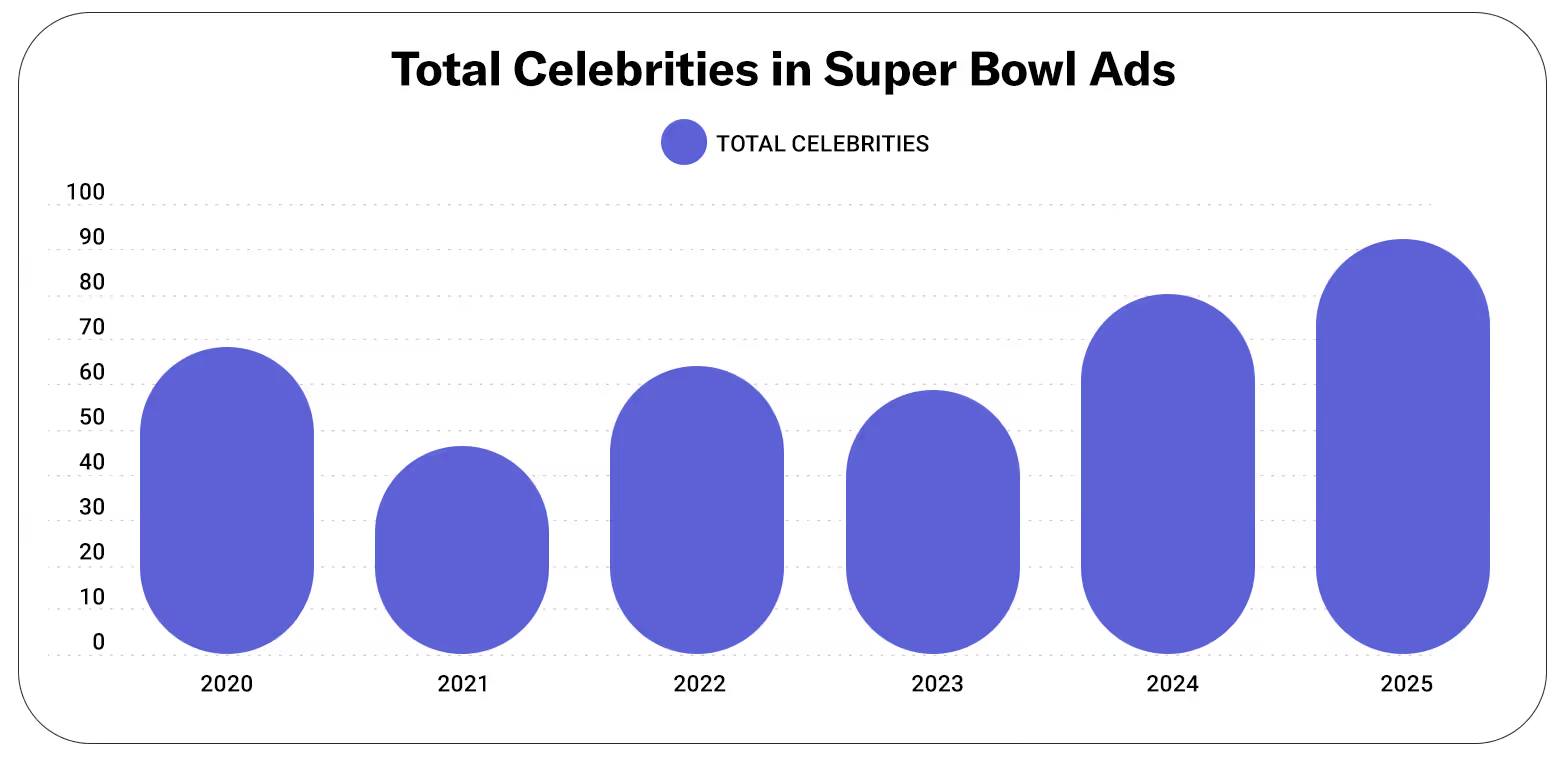
All-star casts now drive the majority of celebrity payments on Super Bowl Sunday, according to XR, which delivers more than 80% of Big Game ads and pays the celebrities in them. From 2020 to 2025, total estimated celebrity talent spending in Super Bowl advertising grew nearly 30 percent. And over the same period, the average number of celebrities per ad rose steadily year over year.
Why Ensembles Win on the Super Bowl Stage
The economics of the Super Bowl help explain why this approach has taken hold. With 30-second spots routinely costing between $8-10 million, brands have little tolerance for ads that fail to register immediately. In that environment, ensemble casting functions less as creative excess and more as risk management.
Multiple celebrities increase the likelihood that viewers recognize at least one face instantly. They allow brands to connect with different demographics and cultural touchpoints at the same time. And they help ensure that a Super Bowl spot feels scaled to the size and cost of the moment.
How This Shows Up in Creative
Recent Super Bowl campaigns show how this strategy comes to life on screen. Brands like Bud Light and Uber Eats have leaned into ensemble casting, assembling sprawling mixes of actors, athletes, and musicians. Dunkin’ has taken a similar route with its DunKings universe, building ads around recurring celebrity groups in the Damon–Affleck world rather than a single spokesperson.

Even newer advertisers like Poppi are embracing the ensemble model, using groups of popular social influencers, instead of traditional Hollywood talent, to reach younger audiences on the rare occasion they are actually watching live TV.

The Economics Behind the Strategy
Celebrity appearances command a significant premium during the Super Bowl compared with typical advertising campaigns. Based on more than 12,000 guaranteed celebrity payments processed by XR from 2019 through 2025, the average celebrity payment across advertising outside the Big Game was $518,000. During the Super Bowl, that figure jumps to roughly $2.6 million per celebrity.

Once brands commit to Super Bowl level media and talent budgets, the incremental cost of adding additional celebrities becomes easier to justify. Expanding to an ensemble cast can meaningfully increase audience resonance and engagement without proportionally increasing risk.
Expect More Stars, Not Fewer
The rise of celebrity ensemble casts reflects broader shifts in audience behavior. Culture is fragmented. Fame is multidimensional. Fewer single celebrities command universal recognition across demographics.
“This isn’t about using more celebrities just for the sake of it,” says Graham McKenna, Chief Marketing Officer at XR. “Brands are being far more deliberate about how they use talent to reach different fans at the same time. Ensemble casting gives advertisers a way to do that in a single, high-impact moment like the Super Bowl.”
As media costs rise and attention becomes harder to earn, the Super Bowl is likely to remain the clearest signal of where high-stakes advertising is headed next.
Contact Us to learn more about XR’s Super Bowl data, as well as XR Ad Delivery and Celebrity Payment solutions.
Who We Roll With


