
Captions Are No Longer Optional: U.S. Audiences Now Expect Them Everywhere They Watch Video

New York – May 21, 2026 – XR (Extreme Reach), the leading platform for powering advertising operations, today released new research showing audiences around the world are watching more video with captions turned on than ever before. And it’s not just on social media. From streaming and TV to TikTok and Instagram, captions have become part of the viewing experience across nearly every screen and device. Yet most advertisers still fail to caption their ads, falling behind evolving audience behaviors and expectations.
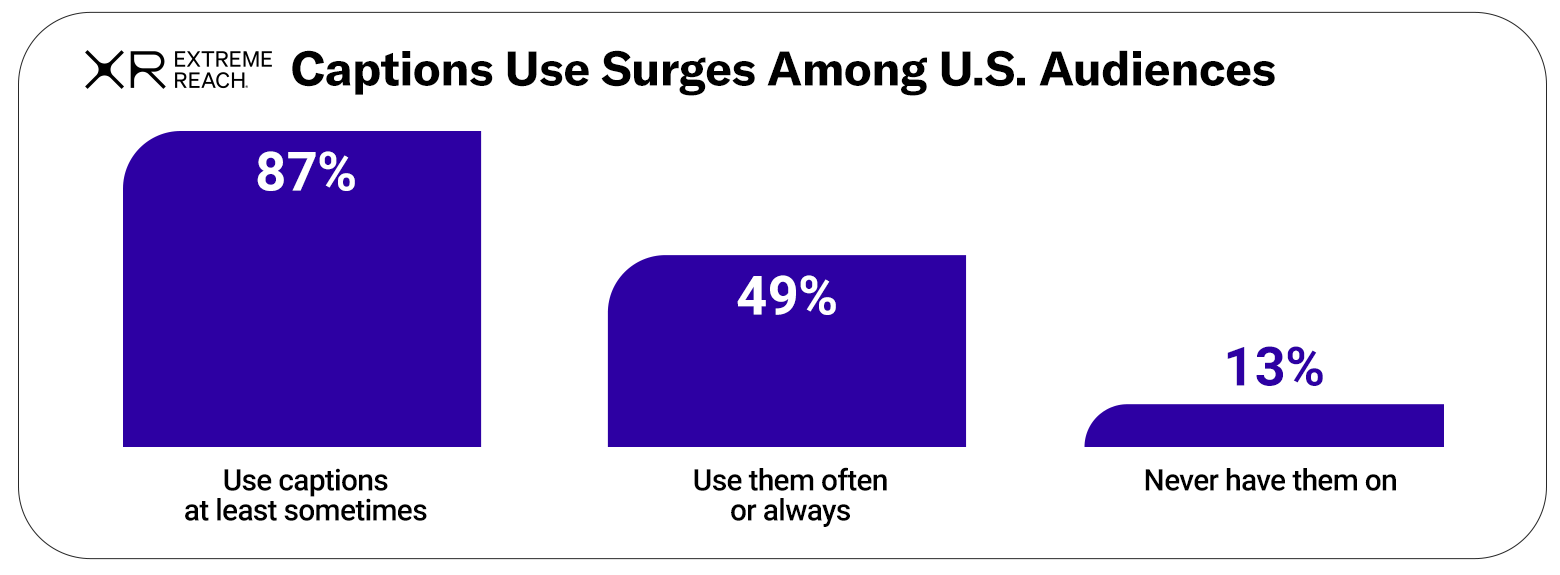
The study, released to mark today’s World Accessibility Day, was conducted in partnership with MX8 Labs and surveyed more than 3,000 people across the U.S., U.K., France, Spain, and Germany. The findings show that captions have become a mainstream viewing behavior in every market. But by nearly every measure, the U.S. has emerged as the most caption-heavy audience. Eighty-seven percent of Americans say they use captions at least sometimes, while nearly half say they use them always or often when watching video.
Caption Use Surges Among U.S. Audiences
“Captions started as an important accessibility feature for audiences with hearing impairments, but they’ve evolved into something much bigger,” said Graham McKenna, CMO of XR Extreme Reach. “Captions are now part of how we watch movies, streaming series, social content, and advertising. For many of us, captions have become as important as the picture and sound, helping people follow dialogue and stay connected to the story.”
GenZ and Millennials are Driving Caption Adoption
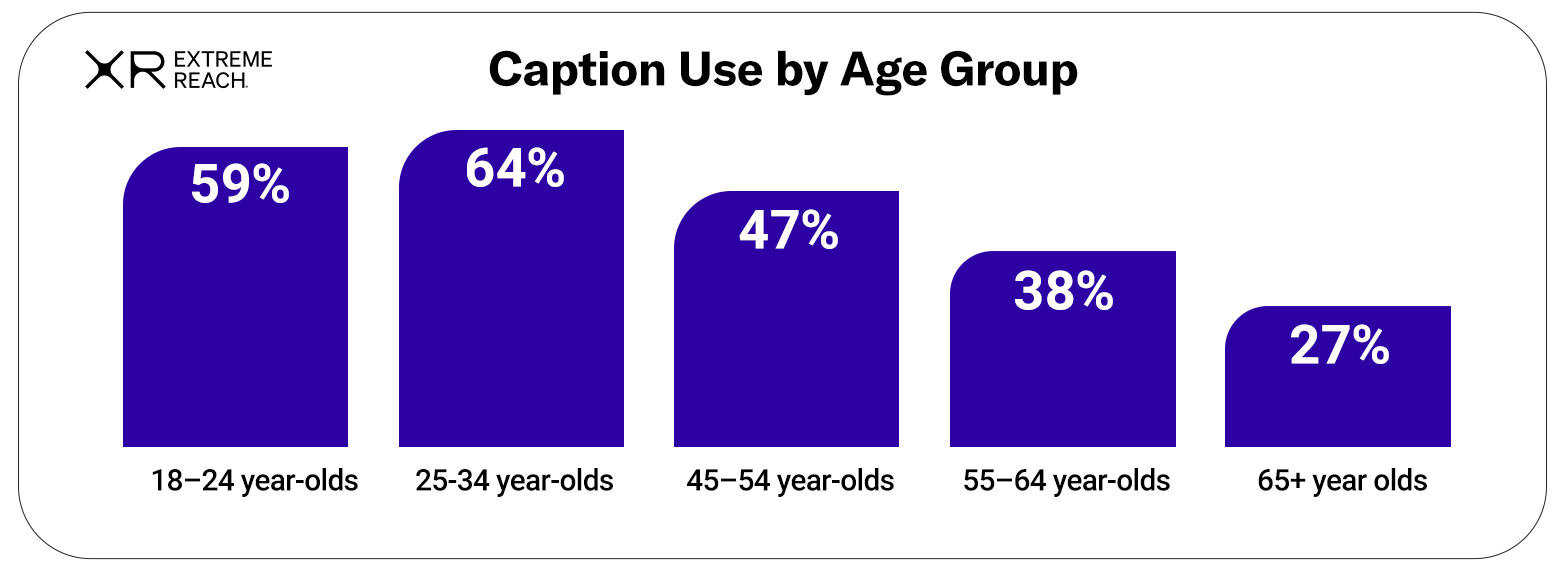
XR’s research debunks the idea that captions are mainly for older or hearing-impaired audiences. Nearly 60 percent of 18–24-year-olds say they use captions always or often, compared to just 27 percent of viewers over 65. Caption viewing is being driven by a generation raised on TikTok, Instagram, and short-form video, where captions aren’t optional, they’re expected.
Captions Aren’t Just for Accessibility Anymore
The top reasons people use captions cuts across all age groups and goes far beyond accessibility. Viewers say they turn on captions to better understand dialogue and accents, deal with unclear audio or noisy rooms, or simply because they like watching video that way. Surprisingly, 42 percent of U.S. viewers prefer to watch video with captions even when the audio is perfect.
- 44% - understand dialogue better
- 43% - catch details they might otherwise miss
- 36% - improve attention to the screen
- 21% - multi-task when watching
Smart TVs remain the most popular device for watching video with captions, with 86 percent of viewers across all markets using them to watch in the home. Smartphones follow at 46 percent, with laptops at 36 percent, tablets at 24 percent, and gaming consoles at 15 percent. Yet caption usage remains remarkably consistent across every screen and content genre.
Ads with Captions Drive Audience Attention
Younger audiences aren’t just using captions more than anyone else, they’re also paying more attention to ads because of them. 61 percent of 25-34-year-olds say captions and subtitles make them more likely to pay attention to ads, the highest lift of any age group and the exact audience most brand advertisers are trying to reach.
- 45% - 18–24-year-olds /increased attention
- 61% - 25-34-year-olds /increased attention
- 20% - 55–64-year-olds /increased attention
- 14% - 65+ year olds /increased attention
U.S. Advertiser Still Lag with Caption Adoption
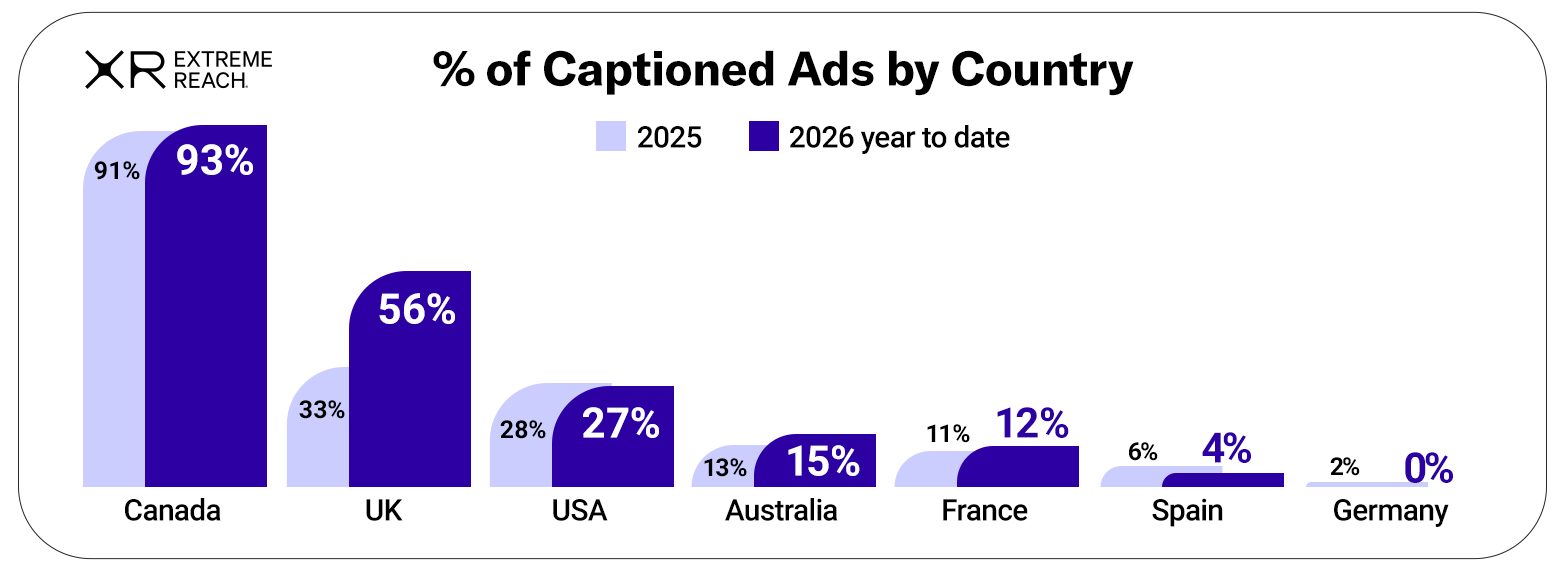
While U.S. advertisers have made progress in improving accessibility through captions and audio descriptions, there is still a major gap between caption-enabled entertainment content and the ads running alongside it. According to XR’s ad ops platform, which delivers millions of ads annually, only 28% of TV and CTV ads in the U.S. included captions in 2025.
“For brands, agencies, and ad creative leaders, captions are no longer something that can be treated as an afterthought,” said McKenna. “Whether it’s designing video ads for readability, accounting for on-screen text, or making sure key moments still land with captions on, marketers need to start building creative for the way audiences actually watch today.”
The research is clear: captioning ads should become a standard best practice across all creative. Brands that fail to adapt, risk losing audience attention and disrupting the viewing experience. Captions are becoming just as essential as voiceovers and on-screen visuals. On social media, they’re already the norm across both organic content and video ads. Now linear TV, CTV, and streaming need to catch up.
Contact us to learn how you can add captions to your ads, as well as access the full insights from XR's Global Ad Accessibility Report 2026.
Who We Roll With


