
Everyone is Watching with Captions On

New XR Study Shows Captions are the New Default for Younger Viewers
Closed captions are no longer just accessibility tools. They’ve become standard viewing behavior across nearly every screen according to a new global study from XR. From streaming and TV to TikTok and gaming, audiences now expect captions everywhere they watch.
But while audiences have fully embraced captions, most advertisers still haven’t gotten the message. XR’s Globally Accessibility study suggests brands that fail to include captions in their ads risk falling behind consumer expectations and missing out on valuable audience engagement.
2026 XR Global Accessibility Study
XR partnered with MX8 Labs to survey more than 3,000 consumers across the U.S., U.K., France, Spain, and Germany ahead of Global Accessibility Awareness Day, and the findings were clear: caption use has officially gone mainstream.
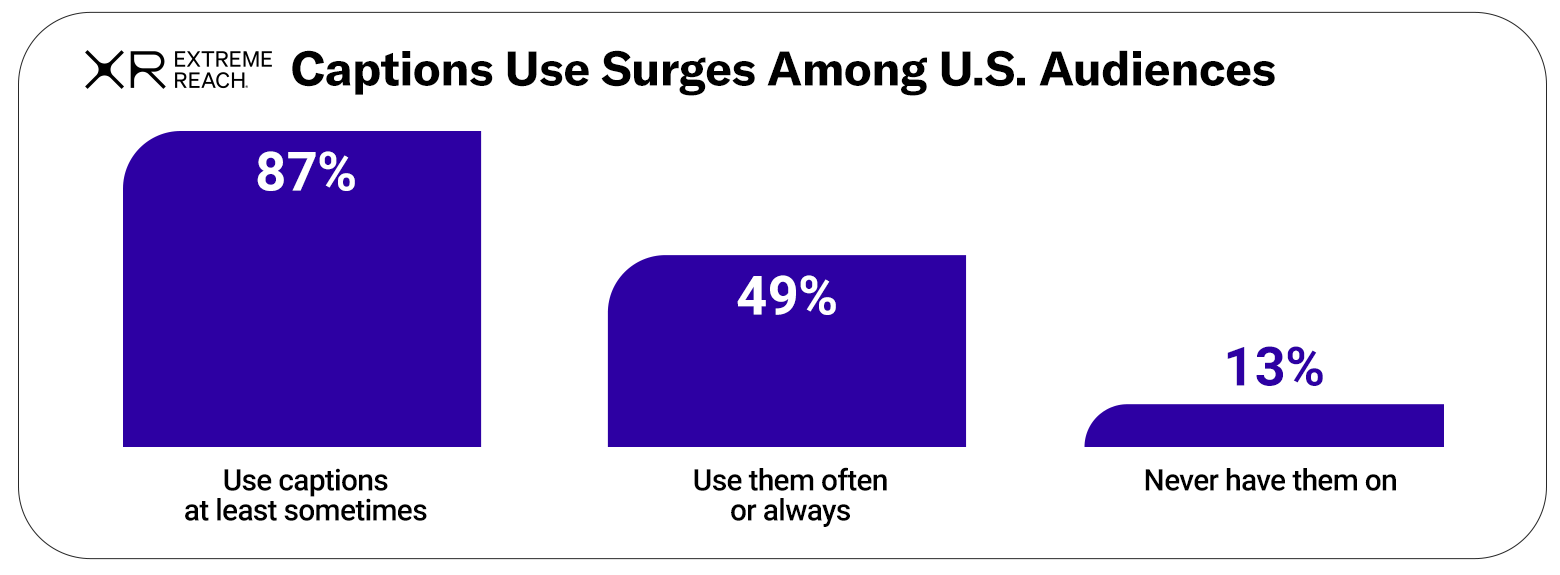
Nearly 87% of Americans say they use captions at least sometimes, while almost half say they use them often or always when watching video content.
Click here to read XR's full Global Ad Accessibility Report
Younger Audiences Are Driving Caption-First Viewing
Surprisingly, younger audiences are driving this shift towards caption use. The generation raised on TikTok, Reels, and short-form video has grown used to watching content with captions enabled on their phones, and those habits have now carried over to streaming, connected TV, and even gaming.
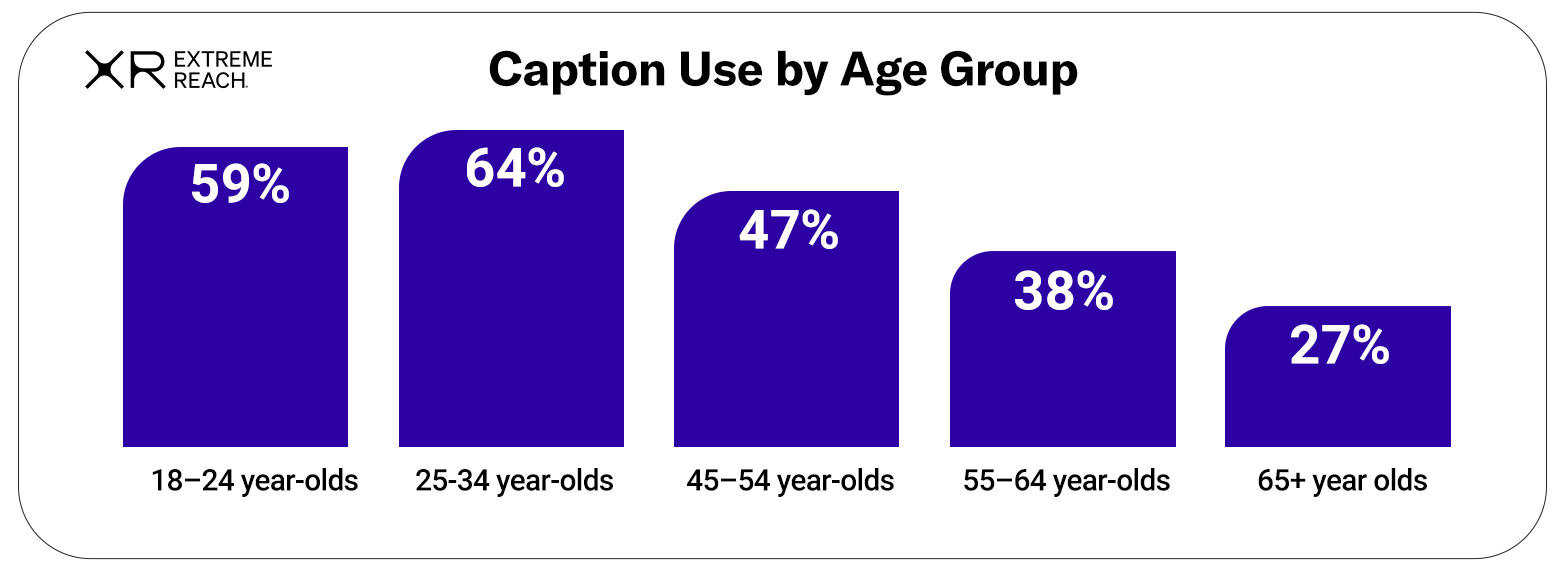
According to the XR study, 59% of 18-24-year-olds and 64% of 25-34-year-olds always or often use captions. Meanwhile, only 27% of viewers aged 65+ report frequent caption use, challenging the idea that captions are tied mainly to older adults with hearing difficulties.
Given that adults aged 18-34 are a primary target market for many brands, advertisers need to adapt to the way those audiences already consume content, or risk losing them in the fray.
Captions Drive More Attention
Audiences who watch with captions are also paying closer attention. And while caption use is more mainstream, the reasons behind it go far beyond accessibility. Globally, the top reason for caption use is improved dialogue comprehension, with Americans reporting the strongest preference.
Beyond understanding content in non-native languages, viewers say captions make it easier to follow dialogue, understand accents, hear speech over music and sound effects, and watch content in noisy environments.
Nearly half of U.S. respondents say captions help them better understand what’s being said. Viewers also use captions to catch details they would miss otherwise and to pay closer attention to the screen.
The bottom line: improved engagement creates a major opportunity for advertisers.

We asked viewers directly how captions impact their attention to advertising, and the results were hard to ignore. Globally, 36% of respondents say they pay more attention to ads when captions are active. In the U.S., that number jumps to 41%.
Yet despite the shift in consumer behavior, most advertisers still aren’t designing creative for a caption-first world. According to XR’s Ad Ops Platform, which delivers millions of ads annually, only 28% of TV and CTV ads in the U.S. included captions in 2025. That means nearly three-quarters of advertisers are still missing the mark on today’s preferred viewing experience, potentially leaving engagement and media dollars on the table.
Despite the U.S. leading caption adoption, U.S. advertisers still lag significantly in delivering caption-enabled ads.

Advertisers Need to Get with the Program
Brands need to start building creative with captions in mind from the beginning, not as a post-production checkbox.
“Whether it’s designing video ads for readability, accounting for on-screen text, or making sure key moments still land with captions on, marketers need to start building creative for the way audiences actually watch today” - Graham McKenna, CMO of XR Extreme Reach.
Audiences are telling us they prefer captioned content and, in many cases, pay closer attention when captions are present. And that behavior now extends across every screen, not just social media. To keep up with the next era of advertising, brands need to start treating captions as part of the creative experience itself, or risk losing the attention of a huge group of highly engaged viewers.
Contact us to learn how you can add captions to your ads, as well as access the full insights from XR's Global Ad Accessibility Report 2026.
Who We Roll With


