
Nearly 90% of Advertisers Now Use AI in Creative Production

Advertising production teams are under more pressure than ever to create more content, move faster, and do it all without adding more heads. To keep up, many marketers are using AI to help fill the gaps. But what does this actually look like in practice?
XR teamed with MX8 Labs to survey more than 400 marketers across brands, agencies, and production studios across the U.S and U.K. for XR’s State of Ad Ops report.
In Part III of our series, we’re taking a closer look at how brands and agencies are putting AI to work across their ad production workflows, and what this means for both the process and final creative deliverables.
Your (Not So New) AI Companion
AI is no longer the shiny new tool teams are experimenting with, it's already a core part of their production workflows.
According to XR’s study, 88% of respondents are actively using or piloting AI across production operations, with nearly half of teams using it every day. The frequency and sophistication of use may vary between brands and agencies, but the conversation has clearly shifted. The question is no longer whether teams are using AI. It’s how they’re using it, where it fits into the workflow, and what problems they’re trying to solve with AI.
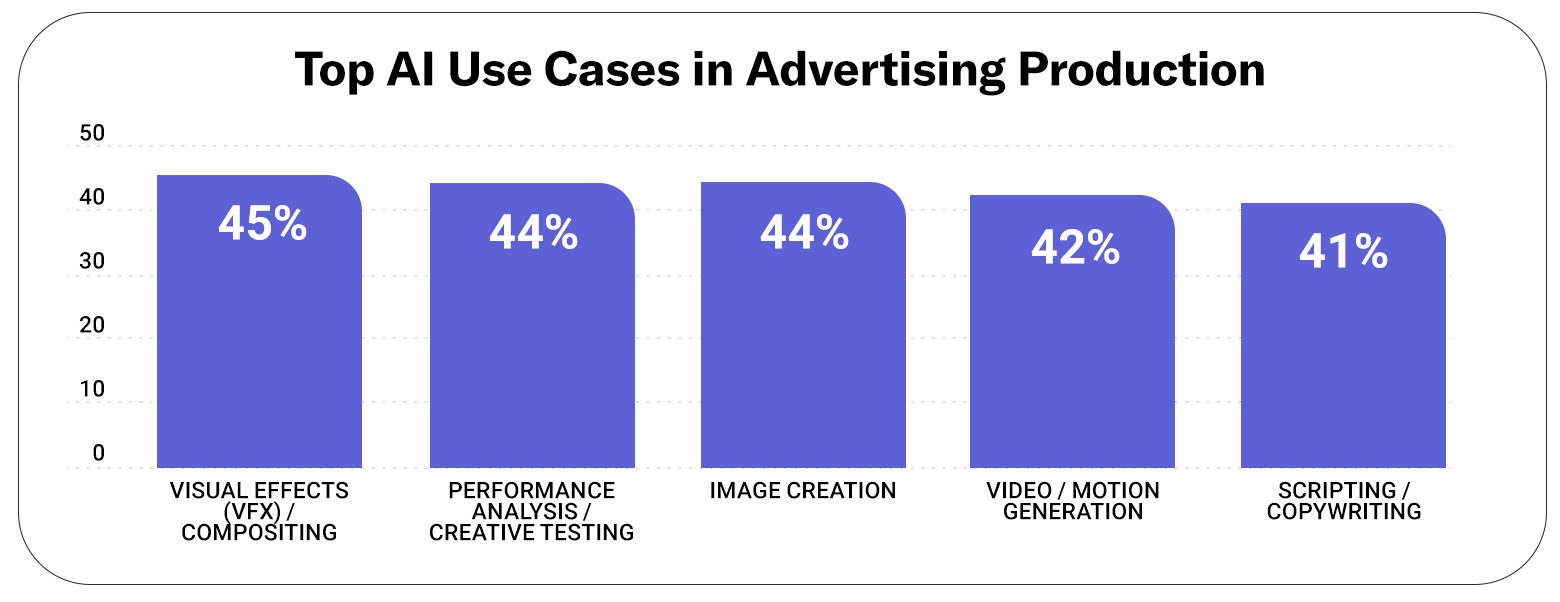
Full-service agencies, which lead AI adoption, use it to speed up VFX work, image creation, and creative testing. The goal for agencies is simple, they want to scale output and keep pace with increasing client demands.
Brands tend to use AI earlier in the creative process. Tasks like campaign brief development, scripting, copywriting, and ideation are some of the most common use cases, helping in-house teams move faster on planning and content development before production even begins.
AI Performers Have Entered the Chat
Synthetic talent and digital replicas are becoming more common in creative production with marketers more willing to experiment with them. While brands are taking a more cautious approach, nearly one-third of full-service agencies reported already using synthetic performers in some capacity.
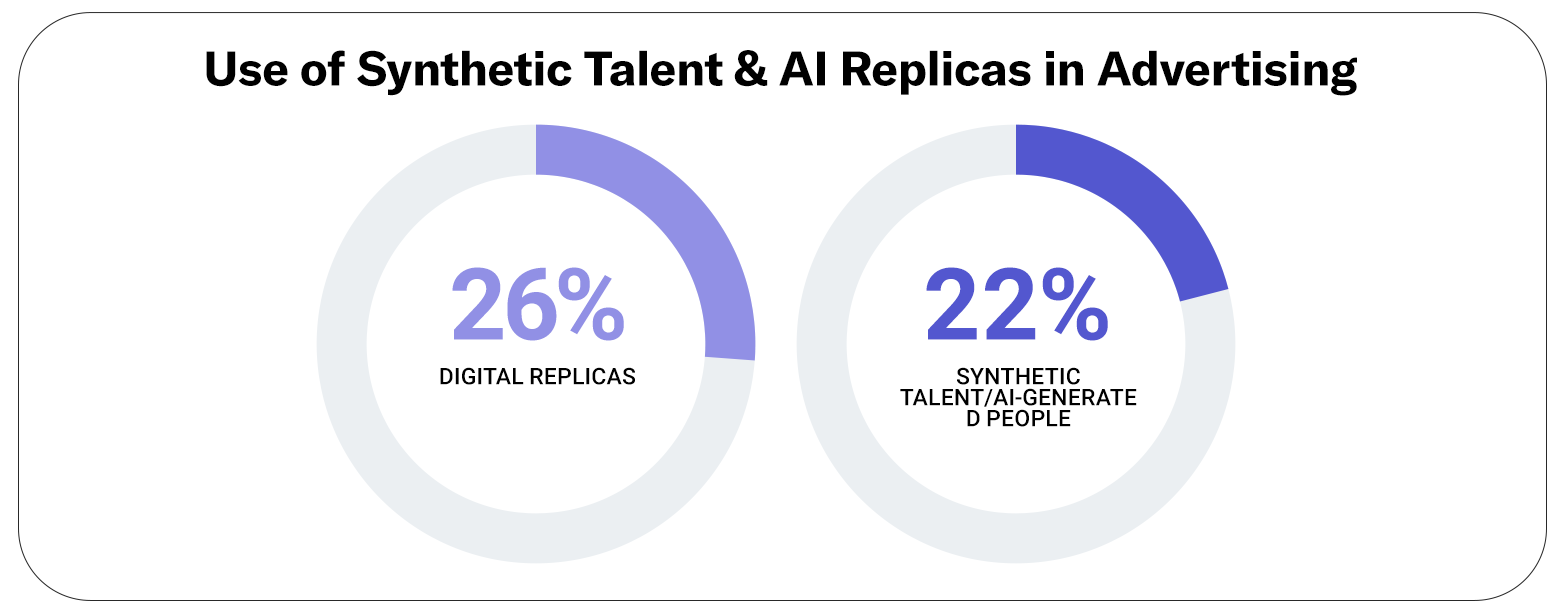
To support this shift, XR recently innovated its payment platform to support new SAG-AFTRA performer categories, including Digital Replicas and Synthetic Performers, helping brands and agencies manage compliant, scalable payment workflows as AI-driven production continues to evolve. Read the full announcement for more details.
AI Isn't Replacing Creative Directors
As advertising demands grow and deadlines shorten, teams are turning to AI to keep pace, but not necessarily to cut costs. Nearly half of respondents cite improving creative quality and personalization as their top reasons for using AI, followed by improving speed-to-market. Reducing production costs comes in a distant third.
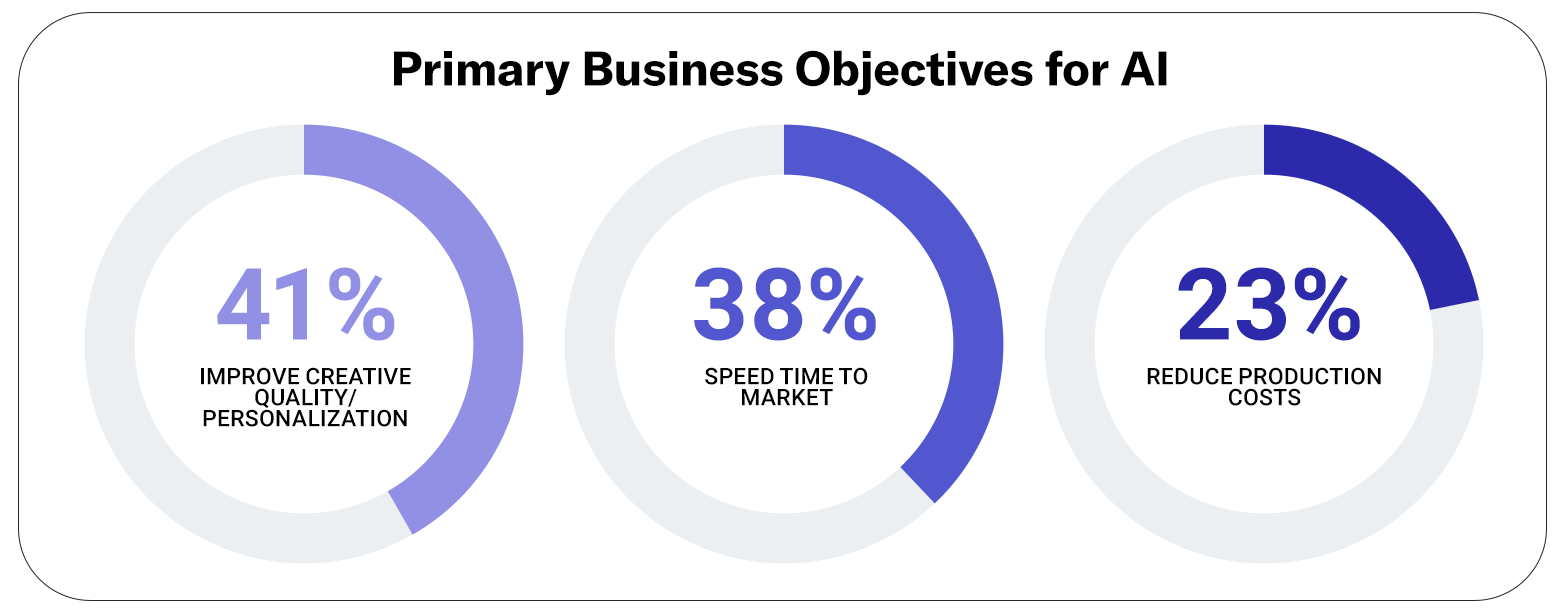
Agencies are closely aligned with XR’s findings, focusing most on creative quality (48%) and speed to market (36%). Brands tell a different story, with 38% saying their main goal is to produce more assets to support cross-platform demand. For many brand teams, AI is about getting more work done, faster.
Which begs the question: how do brand and agency teams actually track, manage, and measure AI assets alongside everything else happening in their production ecosystem? Hint, the new XR ONE platform is built for this.
Stay tuned for more insights from XR’s State of Ad Ops Report, including a closer look at the types of content teams are producing and where their advertising investment priorities are.
Who We Roll With


